Leadership in 2026: What’s changing (and why the old tools won’t work and what to do instead)
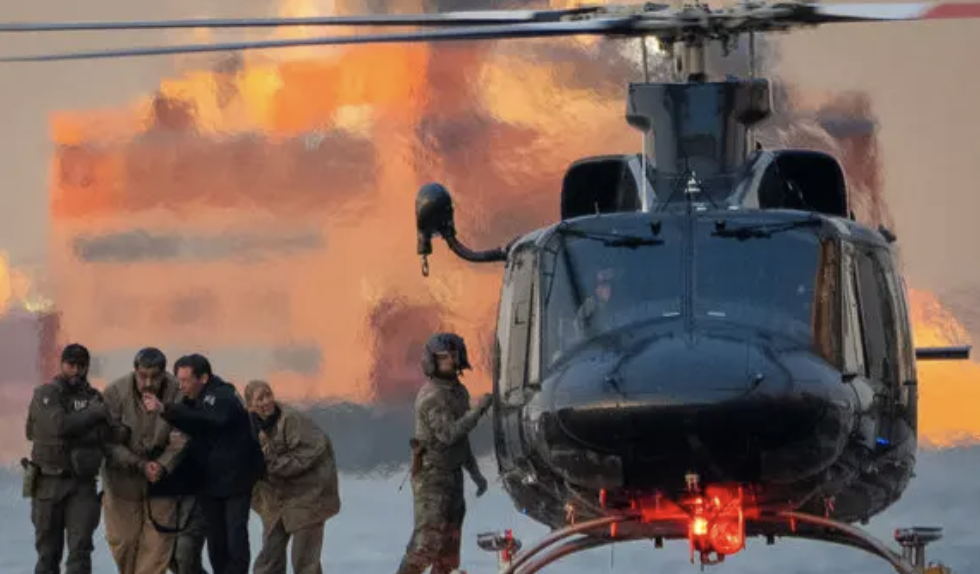
Photo source: New York Times
We live in polarized, chaotic, turbulent times.
Unprecedented times.
A moment in time when uncertainty, volatility and disruption rule our days, surprises and shocks around each corner.
As I write this we are only 12 days in to 2026. What will the next 11.5 months hold if the rest of the year continues to look like the start?
After years of steady plodding, 2025 was a steep climb towards crisis. 2026 will take the trail markers for crisis and throw them over the edge of the cliff, tumbling down the mountain in ways the world may not have seen before. We won't have a path to follow, so we will have to find our way forward together.
A colleague asked me this week to share my predictions for 2026 that will impact the way we work together, and it felt like ideas converging in the space because I had just started this blog about how to lead with what is coming this year.
I’m guessing here with these ideas and predictions, going off instinct and experience, reflecting on the last decade and the trends I’ve experienced in the public arena, around leadership tables, in the spaces between people. I acknowledge my biases; I’ve written my predictions and then gone looking for evidence to support them, and they are grounded in my personal experiences, worldview and values. The World Economic Forum will release their annual global risks report at the end of January 2026, and it will be interesting to see what it contains.
I invite you to review my ideas, and then reflect on your own instincts and experiences;
- What do you see coming?
- What do you fear, worry and wonder about?
- What do you yearn and hope for?
- What has grown bigger and more noticeable in the last year that will continue to expand?
Lean into the collective space of your work and see what emerges as you think about your leadership in 2026. Send me a note and let me know what was the same or different from what I’ve come up with!
What I think 2026 will hold for us as leaders
Democracy is on the edge of a cliff
There has been a global rise in authoritarianism, populist parties encouraging polarization, a decrease in freedom of the press and an inter mingling of billionaires, CEOs and politicians working together to set public policy in their own interests. With recent events in Venezuala, threats against Greenland, Cuba, Canada by the USA, and a ninth consecutive year with democracy on the decline globally, we are on a precipice of reduced freedoms. I wonder if the pandemic has hastened this decline? It seems to me that when people experience a major disruption and traumatic event, they look and yearn for certainty and stability. Authoritarian strong-arm governments provide a sense of certainty and the illusion of power to the people, while eroding freedoms, transparency and the rule of law.
Distrust, grievances and conflict will escalate in the public arena
Edelman produces an annual trust barometer and 2025's report focused on the link between grievances and lack of trust. (The 2026 report is not yet out). Grievances feed polarization and a sense that the political systems of the world are broken, or not working for most people, and this creates a sense of desperation. Feeling despair, hopelessness and that the system is unfair and will not get better, that government is not working in their interests, drives people to increasingly volatile measures to protect themselves and their families. When you think the system is unfair and no one cares, there is no trust. Desperate people take desperate actions. The Council on Foreign Relations has highlighted the conflicts to watch in 2026, and notes growing political violence in the US as something to pay attention to, in addition to significant conflict zones around the globe. The International Crisis Group notes that things have become significantly more volatile globally in the last year. You probably witness, feel and experience in your work with community and groups, that the conflict is rising when you bring people together; there is more reactivity, tension and conflict in the space.
Misinformation, disinformation and malinformation are the battle of the century
Maria Ressa, the journalist who won the 2021 Nobel Peace Prize, has said, "An atom bomb exploded in our information ecosystem, and it has silently destroyed, and continues to destroy, the foundations democracy requires to survive. Without facts, you can’t have truth; without truth, you cannot have trust. Without these three, we have no shared reality. You cannot have journalism. You cannot have democracy." She lays the blame at the feet of tech companies, whose algorithms increase polarization, escalate conflict and feed the rise of authoritarian rule. She notes that "The mother of all battles is information integrity — seeing the difference between fact and fiction, creating a shared reality. If we win that battle for information integrity we can win the rest. But if we lose that, we lose it all.” The danger has never been more real, with world leaders and governments using misinformation and disinformation to serve their own agendas and interests. We need new, creative, innovative ways to tackle this pressing challenge to uplift the role of truth, honesty and integrity in our communities and systems. This panel discussion on the politics of misinformation references research that shows that people (not bots) are the biggest spreaders of misinformation, that fake news spreads faster than real news, and most of that spread happens in political realms.
The world order and alliances are shifting and changing
Tectonic shifts in alliances, global collaboration, agreements and treaties are taking place, at a fast, impactful pace. These changes impact international law, international values that have guided how nations have worked together since the Second World War. These assumptions and ways of working are breaking down and changing and a new set of guiding principles are emerging that may dramatically change the world order.
AI will surpass expectations, in positive and negative ways
In 2025, 60% of US adults used AI to search for information. For those who think AI is coming in the future, it is already integrated into workplaces, organizations and society. The environmental and social impacts of AI are unknown and still being quantified, and our capacity to utilize it in positive, meaningful ways will be both a challenge and an opportunity in 2026.
Fear, anger, hate, anxiety, despair will fill up the space (if we let it)
If you bring groups of people together, watch the news, talk to other human beings about what is happening in their communities and the world right now, you can feel it. Fear, anger, and despair so strong it is visible and palpable. Reactivity so fast it goes from calm to out of control in minutes. Judgement, "othering", division and absolute certainty with no space for nuance or complexity is rampant. These things are running the public arena. So much is focused on what we are against, rather than what we are for, how the other side is wrong and we are right, how there is something wrong and maybe even less than human about those who don't think like we do. It is more important than ever to remember that there is also love and gratitude, hope and yearning, connection and faith in the space between us. We need to make conscious choices to amplify, focus on and lift up what we want more of, to encourage and challenge people to be angry AND tell us what they need. To be fearful AND tell their stories and hopes for the future. To ask questions and create processes, to tell stories and experiences that extend our understanding, to share space that lets us see the humanity in each other, in service to finding a way forward together.
All the isms will be evident, and inequities will grow
Around the world, there has been a rise in hate crimes, discrimination, racism and othering. In Canada, there has been a significant and sustained rise in police reported hate crimes to historic highs, specifically targeted at racial/ethnic groups (primarily black, South Asian and Arab people), religious groups (Jewish & Muslim), as well as significant increases in anti-2SLGBTQI hate crimes. This prompted the Canadian government to table new legislation in September 2025 to change how hate crimes are addressed and give more flexibility to police, as well as to further the implementation of the Action Plan on Combatting Hate. These initiatives are important for addressing hate crimes after they happen, but with a growing rise of hatred directed at targeted groups around the world, we will need preventive and proactive measures to combat violence and dehumanization in society.
A massive societal shift in values, culture, workplaces will reveal itself
I’ve got four adult children. Two of them as well as my husband stopped participating in social media a few years ago (In 2025 social media use declined 10% in the last 3 years, and 1/3 of social media users posted less in 2025 than the year before). All four of my children are tracking non traditional paths towards work and life. None of them believe in careers of sacrifice, traditional hours and requirements of a workplace, and instead focus on a clear work, life balance prioritizing health, joy and fulfillment, living in alignment with their values. While these changes are happening in my family, I see them in the world around us; people seeking connection and community in the real world, rather than online, prioritizing wellness post pandemic, making choices related to work that support full, vibrant lives. This re-alignment will impact employers, communities, transportation networks, and the global economy, and it will be interesting to see how it impacts social values as it plays out.
All the old skills, ways of working, reliable stable assumptions will be fully upended this year. Leaders can't lead the way they did 10 or 5 years ago, or even last year. That Albert Einstein quote echoes in my head, "We cannot solve our problems with the same thinking we used when we created them."
How leaders can meet the moment
Get really clear on what you stand for
Now, more than ever it is crucial to know what you stand for, to have clarity on your own values, what you want to be part of creating or contributing to in your life, organization and community. When the winds of change are blowing with a gale force, the only certainty you may be able to stand in is the essence of what matters most to you, to be able to discern your priorities and work towards them. It is possible, and even likely that your work, life and/or community may be upended by crisis, surprise or change this year. Stripping down to the essence of your values often brings clarity in times of crisis, and allows you to navigate and make choices that have meaning when no path is visible.
Find, feed and nurture your courage
Courage is the catalyst emotion, that creates a shift between emotions that are constricting and heavy, where we get stuck (like anger, fear, despair, grief) and the emotions that are expansive, enable problem solving, creativity and connection (like love, playfulness, hope, gratitude and anticipation). Courage comes from the heart, and results in actions and choices that are grounded in values and faith. It propels you forward despite challenges, uncertainty and confusion. Courage is for the hard things in life, and also for the beautiful ones where being vulnerable or taking a risk creates potential joy and positivity, like getting married, having children, going on an adventure. Nurturing, feeding and making friends with the source of your courage will be crucial this year, as you will be called to step into it on a more regular basis.
Make conscious choices to stay above the line and lead from what life gives you
Sometimes we think that we lead best when we are well rested, calm, grounded and ready for challenges. We believe that we need time to prepare ourselves to lead in times of crisis and challenge. It would be lovely if life were like that, but it rarely gives us the time to prepare or waits until we are ready, and in 2026 that definitely won't be the case. Can you lead from the moment you are in, not the moment you want time to prepare yourself for? Can you find your centre, know what you stand for and are committed to, consider what this moment, this situation and these people need from you and step in? Even when you feel the despair, anger, fear and grief, can you also find within yourself the courage, compassion, hope and faith to lead? Can you feel how you are all these things and so much more and dip into strengths that will serve you in the moment, consciously choosing how you want to show up and take action? This is what 2026 will call for from you.
Agility, flexibility, transformation, innovation and creativity are your foundations this year
Uncertainty and failure are sources of creativity and innovation. If we stay with the discomfort they create and resist the yearning for sameness and stability and the old ways (because they were never as good as you remember they were anyway) and embrace change, leveraging it to harness new ways of working and living, we find the source of creativity, innovation and problem solving. Take what you know, apply some blue sky thinking and a little playfulness, letting your imagination and your commitment to change be free and wild, and see what you come up with. Free yourself from limitations with a bad ideas brainstorm to get creative juices flowing. For inspiration on other big thinkers, Macleans magazine has a fabulous list of innovation the world needs in 2026, like a nuclear reactor for lunar power (and remote community energy), carbon capture from the air and so much more.
Choose long term impact rather than quick, easy, band aid solutions
In times of complexity, chaos and conflict it is tempting to solve problems with solutions that stop the bleeding but may not save the patient. The satisfaction that comes from feeling like we've done something - anything - is appealing, and we can be seen to be doing something. Sometimes you need to act to stabilize a problem, but the complexity of the times will require us to think long-term and embrace the inter-related, non-linear, connected nature of the challenges we are facing. If we can bring people together and address big, serious, messy problems in ways that make progress for the long-term we will be so much further ahead. This will take discipline and commitment, transparency and openness about different ways of working, explaining why to people, resisting the urge to perform for the optics of the situation rather than meeting the real needs.
Collaborate, cooperate, build coalitions
Best practices give us a roadmap to what others have done that we can replicate so we can see that the simple problems we are experiencing have already been solved by someone else, and we can apply their lessons to our situations. When the situations we face are complicated, like identifying the best way to create a transportation network to cross an expanse of water, we can consult experts to weigh the options that may work. These experts may suggest a bridge, a tunnel, a ferry or other ideas. Our complicated problem has been solved before by others in a variety of ways but we need the input of experts to help us decide which option is best for our situation. 2026 will hold far fewer simple or complicated situations, and instead bring us complex and chaotic challenges where we need to lead. In complexity, there isn't a solution evident, and we need to bring together a wide variety of views, perspectives, lived experience and expertise to brainstorm, generate ideas and weigh pros, cons and trade-offs to come up with multiple ways forward that we can test, try and learn from. We will need to amplify what works, and dampen what doesn't and keep trying and testing our way forward, working together with others.
Act local, focus on impact on a larger scale within your sphere of influence
The massive shifts happening on a global level and the fast pace of constant change can create a sense of overwhelm and despair, and it can be challenging to know where to start to affect positive change. Instead of trying to solve all the world's biggest challenges, consider what is in the realm of your sphere of influence. Where in your life, organization, network and community can you affect positive change, work together with others, build positive momentum, test, try, fail and learn what works and what doesn't? Create rapid response teams, community media initiatives, identify specific actions local communities, teams and groups can initiate to see progress, build hope and positivity, which builds more of the same.
Grow, expand your range, stretch, take risks, jump in with both feet to new things
In times of complexity and constant change, leaders need the self-awareness to know their strengths and skills and to understand where they need to grow and stretch into new ways of working, new skills, competencies and ways of being. Now is not the time for the status quo. Instead, how will you expand your range to meet the moment? What will fire your creativity? What will increase your skill to collaborate? How will you find the clarity to know what you stand for? What activities and practices will support you to nurture your courage? What have you been considering trying out, but have been putting off that will stretch or grow you as a leader? Now is the time to stretch, take risks, push the edges of your learning so you can expand your range.
Be real, authentic, honest and a little raw
What we need from each other in 2026 is to see the wholeness of the human beings in our realm, rather than the sound bite performances or curated lives that are presented in one dimension. We cannot work with complexity unless we embrace the complexity of humanity. it is time to stop curating the one part of our lives we think will show us as perfect on social media, to let go of perfection, to embrace wholeness and the rich, beauty that it is to be a messy, whole human. To let ourselves be seen, and to fully see others. Authenticity, openness and honesty build trust, strengthen relationships, deepen understanding and create connection. We need these things in order to solve complex problems together with others. Let's do things together in real life, and stop curating our lives online. The time we take to perform and present one tiny slice of perfection could be better invested in building real relationships and working collaboratively with others.
Build your resilience, focus on wellness, step back and rest when required
For what is coming in 2026, you will need to be resilient. Resiliency is a practice, not a vacation, a bubble bath or a long weekend. It is a ritual and routine of fostering your own wellness, listening to your body and mind, working with your emotions, building your self-awareness to know when to step forward and when to step back so you can lead for the long journey, not a moment in time. Don't take on every cause, know where your strengths and commitment will have the biggest impact and focus there, creating space for others to lead alongside you. Check out and step back when you need to, rather than pushing through becoming less effective, productive and impactful the longer you journey without rest. Give yourself permission to be resilient, knowing you will be a better leader when you are whole, well and vibrant.
This year will present countless challenges, crisis and complexities.
As leaders we will need to make difficult choices, find a deep well of values and commitment, and choose carefully. We will need to keep our heads above water, foster connection, playfulness and creativity. I believe we've got this, and in the inspiring words of Clarissa Pinkola Estes, "We were made for these times."